Market Analysis Decode Your Business Future

Understanding the landscape in which your business operates is not merely an advantage; it’s an absolute necessity for survival and growth. Without a clear picture of market dynamics, consumer behaviors, and competitive pressures, even the most innovative ideas can falter. This is precisely where market analysis steps in, acting as the bedrock upon which sound business strategies are built. It provides a flashlight in the often-dark corridors of commerce, illuminating pathways to success and highlighting potential pitfalls.

At its core, market analysis is a systematic process of gathering, analyzing, and interpreting information about a specific market, including its size, customer needs, competitive landscape, and overall trends. It’s an ongoing process, not a one-time event, requiring continuous monitoring to adapt to ever-evolving conditions. From startups sketching out their initial business plans to multinational corporations looking to launch new products or enter new territories, the insights gleaned from a thorough market analysis are invaluable.

The strategic insights derived from this process enable businesses to make informed decisions across all functions. Whether it's optimizing product development, refining marketing messages, setting competitive prices, or identifying new opportunities for expansion, a deep understanding of the market provides the evidence base needed for confident action. It empowers businesses to move beyond guesswork, replacing assumptions with verifiable data.

Ultimately, a robust market analysis isn't just about understanding the present; it's about predicting the future. By recognizing emerging trends, shifting consumer preferences, and the trajectory of competitors, businesses can proactively position themselves for long-term success. It allows for the creation of resilient strategies that can withstand market fluctuations and capitalize on unforeseen opportunities. This article will delve into the intricacies of market analysis, exploring its components, methodologies, strategic benefits, and how to effectively leverage it to decode and shape your business future.

What is Market Analysis and Why is it Indispensable?

Market analysis is a thorough and structured assessment of a market. It examines the attractiveness and dynamics of a special market within a special industry. This rigorous process involves investigating several critical factors: the target audience, market size, competition, industry trends, and the regulatory environment. Far from being a mere academic exercise, it is a practical tool that provides actionable insights, serving as a compass guiding strategic business decisions. It answers fundamental questions such as: Who are our customers? What do they want? How large is the opportunity? Who are we competing against? And what external factors might influence our success?
The indispensability of market analysis stems from its ability to mitigate risk and identify opportunities. Launching a product or service without understanding its potential reception in the market is akin to sailing without a map. Businesses need to know if there's sufficient demand, if they can effectively reach their target consumers, and if they can differentiate themselves from existing players. Without this knowledge, resources can be wasted, and failure becomes a high probability. Conversely, a well-executed analysis can reveal untapped niches, emerging technologies, or underserved customer segments, paving the way for innovation and significant competitive advantage.

Moreover, market analysis is crucial for strategic planning. It informs everything from product development and pricing strategies to marketing campaigns and sales forecasts. By understanding market dynamics, businesses can set realistic goals, allocate resources efficiently, and develop effective go-to-market strategies. It helps in formulating a compelling value proposition that resonates with the target audience and in identifying the optimal channels for reaching them. In a rapidly evolving global economy, the businesses that consistently perform market analysis are those best equipped to adapt, innovate, and thrive.

Key Components of a Comprehensive Market Analysis
A truly effective market analysis is multifaceted, incorporating several key components to provide a holistic view of the operational landscape. Each component contributes unique insights, and together they form a powerful foundation for strategic decision-making.
Market Size and Growth
This component quantifies the total addressable market (TAM), serviceable available market (SAM), and serviceable obtainable market (SOM). It involves estimating the current size of the market in terms of revenue or units sold, and projecting its future growth rate. Understanding whether a market is expanding, contracting, or stagnant is vital for assessing its potential and feasibility. Factors like demographics, economic indicators, and technological advancements often drive market growth or decline.

Target Audience Analysis
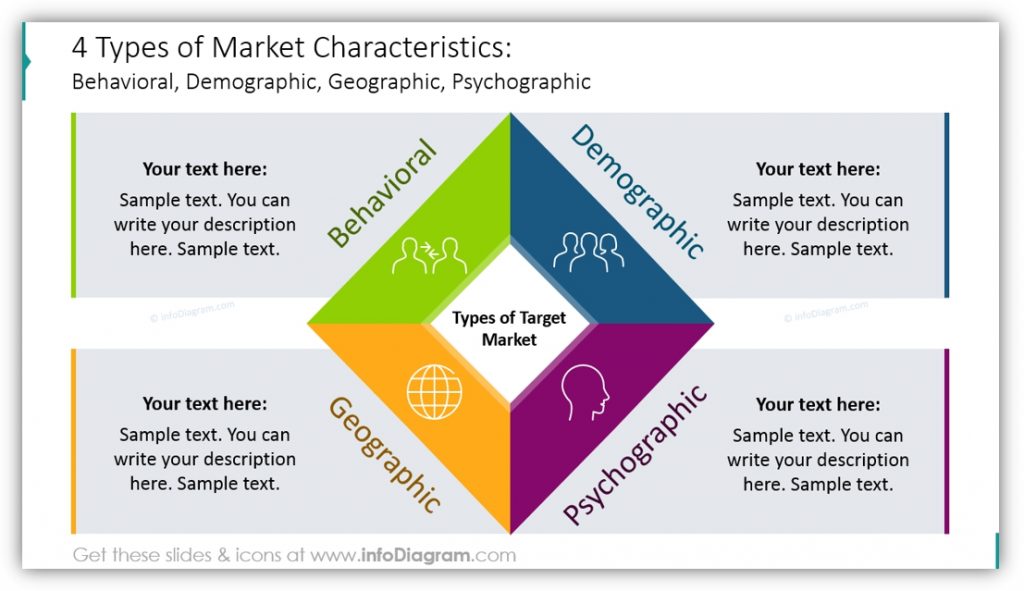
Understanding who your customers are is paramount. This involves dissecting their demographics (age, gender, income, education, location), psychographics (values, attitudes, interests, lifestyles), and behavioral patterns (purchase habits, brand loyalty, motivations, pain points). Creating detailed buyer personas helps to humanize your target market, allowing for more precise product development, messaging, and marketing efforts. Knowing your audience's needs, preferences, and challenges is the bedrock of customer-centric strategies.
Competition Analysis
A thorough assessment of your competitors is crucial. This involves identifying both direct competitors (offering similar products/services) and indirect competitors (addressing the same customer need with different solutions). For each competitor, evaluate their strengths, weaknesses, market share, pricing strategies, marketing tactics, product offerings, and overall reputation. Tools like SWOT analysis (Strengths, Weaknesses, Opportunities, Threats) can be particularly useful here, providing a structured way to compare your capabilities against theirs and identify potential competitive advantages or vulnerabilities.
Industry Trends and Future Outlook
This component involves scanning the horizon for emerging trends that could impact the market. This includes technological advancements, shifting consumer preferences, economic indicators, social changes, and environmental concerns. Frameworks like PESTEL analysis (Political, Economic, Social, Technological, Environmental, Legal) can help systematically evaluate these external macro-environmental factors. Understanding these trends allows businesses to anticipate changes, innovate proactively, and position themselves for future growth rather than being caught off guard.
Regulatory Environment
The legal and regulatory landscape can significantly impact a market. This includes understanding relevant laws, policies, industry standards, and compliance requirements that govern how products are developed, marketed, and sold. Changes in regulations can create barriers to entry, impose new costs, or even open up new opportunities. Staying abreast of these developments is essential for operational compliance and strategic planning.
Methodologies for Conducting Effective Market Analysis
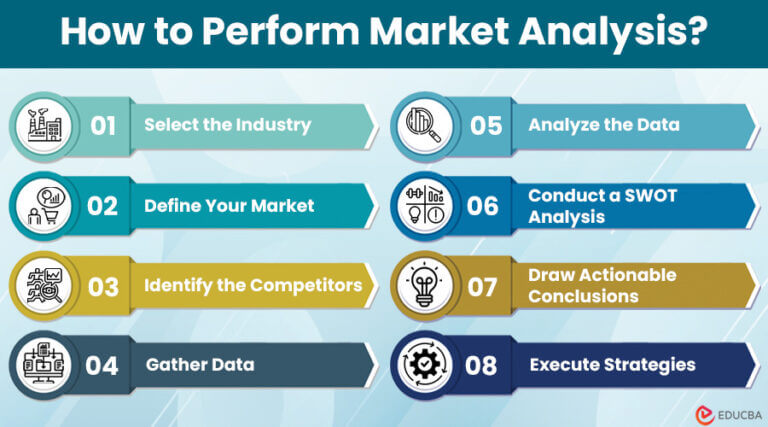
Conducting a robust market analysis requires a combination of research methodologies, each offering distinct advantages. The choice of methodology often depends on the specific questions being asked, the available resources, and the nature of the market.
Primary Research
Primary research involves collecting original data directly from the source. This is invaluable for obtaining specific, timely, and proprietary insights not available elsewhere.
* Surveys and Questionnaires: Administered online, via phone, or in person, these collect quantitative data on opinions, preferences, and behaviors from a large sample.
* Interviews: One-on-one discussions with experts, industry leaders, or target customers provide in-depth qualitative insights, uncovering motivations and underlying sentiments.
* Focus Groups: Facilitated discussions with a small group of target customers can generate rich qualitative data, revealing group dynamics, shared perspectives, and initial reactions to concepts.
* Observations: Directly observing consumer behavior in real-world settings (e.g., in stores, online) can provide unbiased insights into how people interact with products or services.
Secondary Research
Secondary research involves collecting and analyzing existing data that has already been compiled by others. This is typically faster and more cost-effective than primary research, serving as a foundational step.
* Industry Reports and Publications: Market research firms, trade associations, and consulting groups often publish comprehensive reports on specific industries and markets.
* Government Data: Census data, economic indicators, demographic statistics, and business registries provide valuable macro-level information.
* Academic Papers and Journals: University research and scholarly articles can offer theoretical frameworks, historical data, and nuanced perspectives.
* Company Financials and Reports: Publicly available financial statements of competitors can reveal insights into their market share, revenue, and profitability.
* News Articles and Online Resources: Business news outlets, blogs, and online forums can provide current events, emerging trends, and public sentiment.
Quantitative vs. Qualitative Data
Effective market analysis often blends both quantitative data (numerical data, statistics, measurable facts) and qualitative data (non-numerical data, opinions, experiences, descriptions). Quantitative data helps answer "what" and "how many" questions, providing statistical validity and trend identification. Qualitative data answers "why" questions, offering deeper understanding of motivations, perceptions, and complex behaviors. Combining both provides a more complete and nuanced picture of the market.
The Strategic Benefits of Market Analysis for Business Growth
The insights gained from a thorough market analysis translate directly into tangible strategic benefits, propelling businesses towards sustainable growth and competitive advantage.
Informed Decision-Making
Perhaps the most significant benefit is the ability to make decisions based on data rather than intuition or guesswork. Whether it's deciding to launch a new product, enter a new geographic market, adjust pricing, or change a marketing campaign, a solid market analysis provides the evidence required for confident, strategic choices. This reduces risk and increases the likelihood of success.
Product Development and Innovation
By understanding customer needs, pain points, and preferences, businesses can develop products and services that truly resonate with their target audience. Market analysis helps identify gaps in the market, opportunities for feature enhancements, or entirely new product categories that address unmet demands. It fosters a customer-centric approach to innovation, ensuring that development efforts are aligned with actual market desires.
Marketing and Sales Strategy Optimization
Knowing your target audience inside out allows for the creation of highly effective marketing messages and campaigns. Market analysis helps identify the most effective communication channels, the right tone, and the key benefits to highlight. It also informs sales strategies, enabling teams to target prospects more efficiently, understand their objections, and tailor their pitches for maximum impact. This leads to higher conversion rates and a better return on marketing investment.
Risk Mitigation
Operating in any market inherently involves risk. However, a comprehensive market analysis helps to identify and quantify potential threats such as intense competition, economic downturns, regulatory changes, or shifting consumer tastes. By understanding these risks beforehand, businesses can develop contingency plans, diversify their offerings, or adapt their strategies to mitigate adverse impacts, making them more resilient to market fluctuations.
Identifying Niche Opportunities
Beyond just understanding the broad market, detailed market analysis can uncover specific niche segments that are underserved or overlooked by larger competitors. These niches often represent significant opportunities for smaller businesses or those looking to specialize. Identifying and successfully targeting a niche can lead to strong brand loyalty, higher profit margins, and a defensible market position.
Common Challenges in Market Analysis and How to Overcome Them
While the benefits of market analysis are clear, the process itself is not without its challenges. Recognizing these obstacles and knowing how to navigate them is key to deriving accurate and actionable insights.
Data Overload or Lack of Data
One common challenge is either being swamped with too much irrelevant data or struggling to find any relevant data at all. In the age of big data, sifting through vast amounts of information to extract meaningful insights can be daunting. Conversely, for highly niche markets or emerging industries, readily available data might be scarce.
Overcoming: For data overload, define clear research questions upfront and use sophisticated analytical tools. For data scarcity, rely more heavily on primary research, expert interviews, and qualitative methods to gather direct insights.
Bias
Bias can creep into market analysis from various sources, including the researchers' preconceived notions, leading questions in surveys, or respondents' desire to give socially desirable answers. This can skew results and lead to inaccurate conclusions.
Overcoming: Employ strict research protocols, use neutral language in questions, ensure diverse respondent pools, and consider multiple data sources to triangulate findings and cross-validate information. Awareness of potential biases is the first step to mitigating them.
Dynamic Markets
Markets are rarely static. Consumer preferences change, new technologies emerge, and competitors adapt, making it difficult to capture a definitive snapshot. What is true today might not be true tomorrow.
Overcoming: Treat market analysis as an ongoing process, not a one-time event. Implement continuous monitoring of key market indicators, trends, and competitive activities. Utilize real-time data where possible and be prepared to update strategies based on new information.
Resource Constraints
Conducting thorough market analysis can be time-consuming and expensive, requiring skilled personnel and access to various data sources and tools. Smaller businesses or startups often face significant resource constraints.
Overcoming: Prioritize the most critical areas of analysis. Leverage cost-effective secondary research first. Explore open-source data, government reports, and free online tools. Consider collaborating with academic institutions or interns for research assistance. Focus on actionable insights rather than exhaustive studies.
Outdated Information
Relying on old data can lead to flawed conclusions, especially in fast-paced industries. Information that was relevant even a year ago might be obsolete today.
Overcoming: Always verify the recency of your data sources. Prioritize reports and statistics that are as current as possible. Supplement secondary data with primary research to get the most up-to-date perspectives directly from the market. Establish a process for regularly refreshing key market insights.
Leveraging Technology in Modern Market Analysis
The advent of advanced technologies has revolutionized the way market analysis is conducted, offering unprecedented capabilities for data collection, processing, and insight generation. Embracing these tools can significantly enhance the depth, accuracy, and efficiency of your analysis.
Big Data Analytics
The sheer volume, velocity, and variety of data available today – from online transactions to social media interactions – present both a challenge and an enormous opportunity. Big data analytics tools can process massive datasets to identify hidden patterns, correlations, and trends that would be impossible to uncover manually. This includes predictive analytics, allowing businesses to forecast future market behavior and consumer demand with greater accuracy.
AI and Machine Learning
Artificial Intelligence (AI) and Machine Learning (ML) algorithms are increasingly being used to automate aspects of market analysis. These technologies can perform tasks like sentiment analysis from customer reviews, automate competitive intelligence gathering, identify emerging trends from unstructured text data, and even build sophisticated predictive models based on historical market data. AI-powered platforms can sift through vast amounts of information far more quickly and accurately than human analysts.
CRM Systems
Customer Relationship Management (CRM) systems are not just for managing customer interactions; they are rich repositories of internal market data. By analyzing customer purchase history, interaction logs, support tickets, and sales pipeline data, businesses can gain deep insights into customer preferences, buying cycles, and potential upsell opportunities. Integrating CRM data with external market data provides a holistic view of the customer within the broader market context.
Social Listening Tools
Social media platforms are enormous, real-time focus groups. Social listening tools allow businesses to monitor mentions of their brand, competitors, industry keywords, and relevant topics across social media, blogs, forums, and news sites. These tools can track sentiment, identify influencers, uncover emerging conversations, and provide immediate feedback on campaigns or product launches. This offers invaluable qualitative and quantitative data on public perception and market discourse.
By strategically integrating these technological solutions, businesses can move beyond traditional market research methods to achieve a more dynamic, real-time, and data-driven understanding of their markets, enabling proactive decision-making and rapid adaptation.
Conclusion
Market analysis is far more than a mere business jargon; it is an indispensable strategic imperative for any organization aiming for sustainable growth and long-term success. It serves as the intelligent backbone for every significant business decision, from product conceptualization and pricing strategies to marketing initiatives and competitive positioning. By systematically dissecting market size, understanding target audiences, scrutinizing competitors, anticipating industry trends, and navigating regulatory landscapes, businesses gain clarity amidst complexity.
The benefits derived from a rigorous market analysis are profound: it fosters informed decision-making, fuels customer-centric product innovation, optimizes marketing and sales efforts, mitigates inherent business risks, and illuminates previously unseen niche opportunities. While challenges like data overload, inherent biases, dynamic market conditions, and resource constraints exist, these can be effectively navigated through judicious application of diverse methodologies, from primary and secondary research to the cutting-edge capabilities offered by big data analytics, AI, CRM systems, and social listening tools.
In essence, a comprehensive market analysis empowers businesses to decode the intricacies of their operational environment, transforming uncertainty into strategic foresight. It’s an ongoing journey of discovery that, when diligently pursued, not only helps businesses understand their current standing but crucially, enables them to proactively shape and secure their future in an ever-evolving global marketplace. Invest in robust market analysis, and you invest directly in the intelligence that will drive your business forward.