Mastering Financial Forecasting for Growth

The ability to accurately predict future financial performance is not merely a desirable skill but a fundamental necessity for any organization aiming for sustainable growth. This critical practice, known as financial forecasting, allows businesses to anticipate revenue, expenses, and cash flow, providing a roadmap for strategic decision-making. In today's dynamic economic landscape, where market shifts and unforeseen events can significantly impact an enterprise, robust forecasting offers a powerful competitive advantage, enabling proactive adjustments rather than reactive responses.

Beyond mere prediction, effective financial forecasting empowers businesses to set realistic goals, allocate resources efficiently, and identify potential risks or opportunities well in advance. It transforms uncertainty into manageable variables, laying the groundwork for informed investments, operational improvements, and strategic expansions. Without a clear financial outlook, companies risk missteps, from overextending capital to missing crucial market trends, jeopardizing their long-term viability.

For leadership teams, accurate forecasts are the bedrock of sound governance. They inform budgeting cycles, capital expenditure plans, and even workforce planning, ensuring that all aspects of the business are aligned towards common financial objectives. This foresight helps in securing funding, attracting investors, and demonstrating fiscal responsibility to stakeholders, fostering trust and confidence in the organization's future.
Moreover, the process of developing financial forecasts often reveals hidden insights into a company's operations, highlighting inefficiencies or areas of untapped potential. It necessitates a deep dive into historical data, market conditions, and internal strategies, leading to a more comprehensive understanding of the business's drivers and constraints. This analytical rigor is invaluable for continuous improvement and strategic adaptation in an ever-evolving market.
Ultimately, mastering financial forecasting is about more than just numbers; it's about building a resilient, adaptable, and forward-thinking organization. It shifts the focus from merely reacting to the present to proactively shaping the future, ensuring that every financial decision is a step towards achieving long-term growth and success.
Understanding the Fundamentals of Financial Forecasting
Financial forecasting is the process of estimating a company's future financial performance. It involves using historical data, current market conditions, and anticipated future events to project revenues, expenses, profits, and cash flows over a specific period. This essential practice helps businesses make informed decisions, manage resources effectively, and prepare for potential challenges or opportunities. It's not about predicting the future with absolute certainty, but rather providing the most probable financial outcomes based on available information and assumptions.

Why Financial Forecasting is Crucial for Business Success
The importance of financial forecasting cannot be overstated. It serves as a compass for businesses, guiding them through complex economic waters. Firstly, it enables effective budgeting and resource allocation. By anticipating future income and expenses, companies can create realistic budgets, ensuring that capital is deployed where it will yield the highest return. Secondly, forecasts are vital for strategic planning. Whether it's expanding into new markets, launching new products, or undertaking major capital investments, accurate financial projections are essential to assess feasibility and potential returns.

Furthermore, financial forecasts play a significant role in risk management. By identifying potential shortfalls or cash flow issues in advance, businesses can implement mitigating strategies, such as securing additional financing or adjusting spending. They are also critical for performance measurement, providing benchmarks against which actual results can be compared, helping to identify deviations and understand their causes. Finally, reliable forecasts are indispensable for securing financing and attracting investors, as they demonstrate a clear understanding of the business's financial health and future potential.
Key Types of Financial Forecasting Methods
There are various approaches to financial forecasting, each with its strengths and best applications. The choice of method often depends on the available data, the level of detail required, and the specific objective of the forecast.
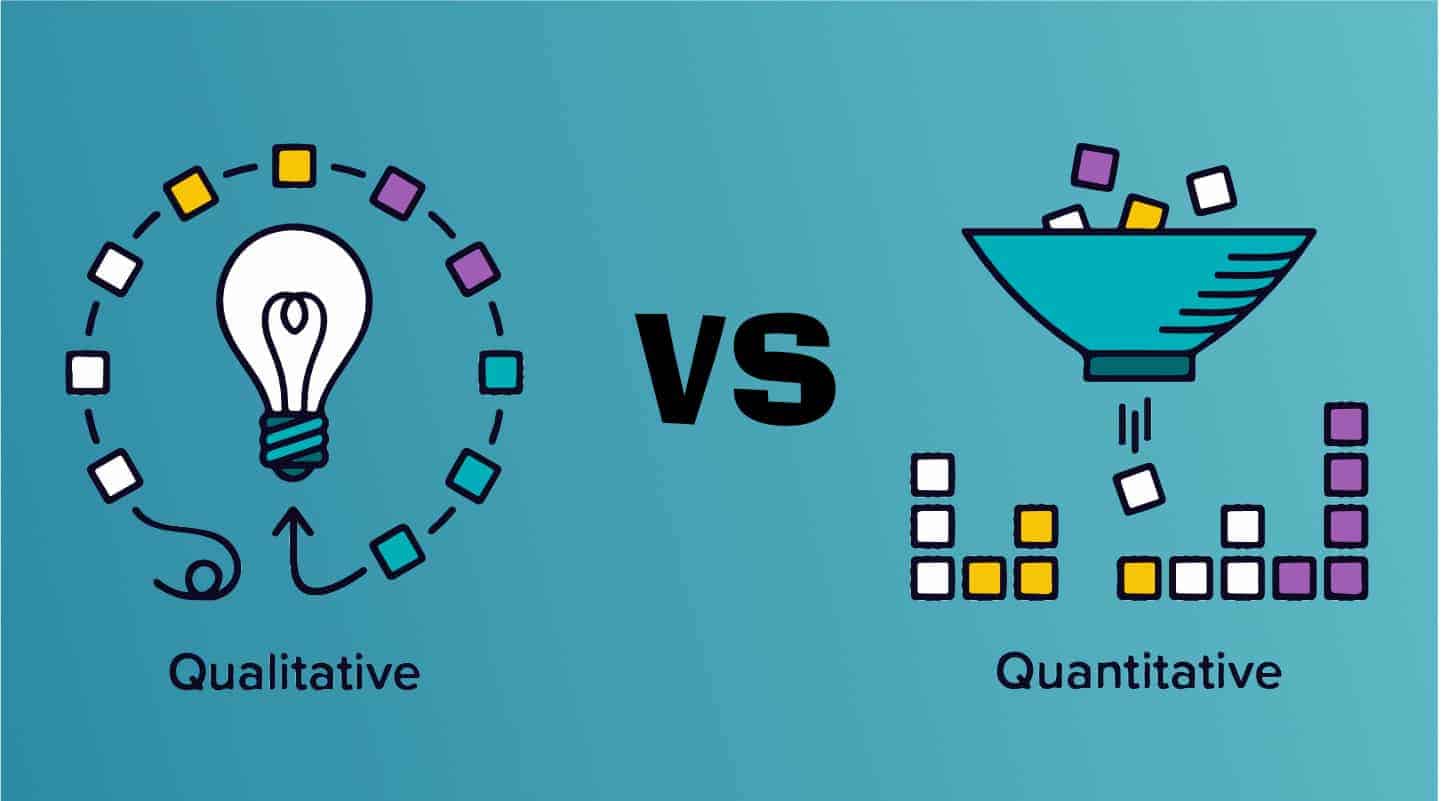
Qualitative Forecasting Methods
Qualitative methods rely on expert judgment, opinions, and non-numerical data when historical data is scarce or unreliable, or when significant market changes are anticipated. These methods are particularly useful for new businesses or during periods of rapid change.
- Delphi Method: Involves soliciting forecasts from a panel of experts, often anonymously, to reach a consensus.
- Market Research: Gathers information directly from customers or potential customers about their purchasing intentions and preferences.
- Sales Force Opinion: Collects insights from sales personnel who are closest to the customers and market.
- Executive Opinion: Combines the insights and experience of high-level management.
Quantitative Forecasting Methods
Quantitative methods use historical data and mathematical models to predict future trends. These methods are more objective and are suitable when ample historical data is available.
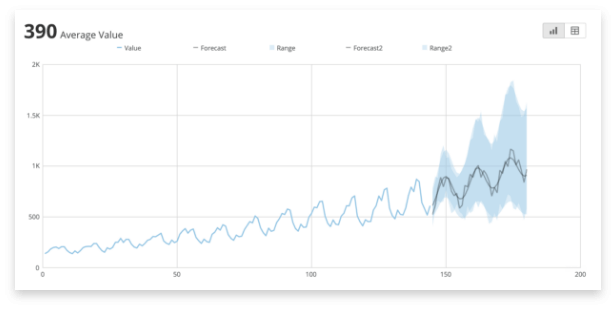
- Time Series Analysis: Analyzes past data patterns to predict future values. Common techniques include:
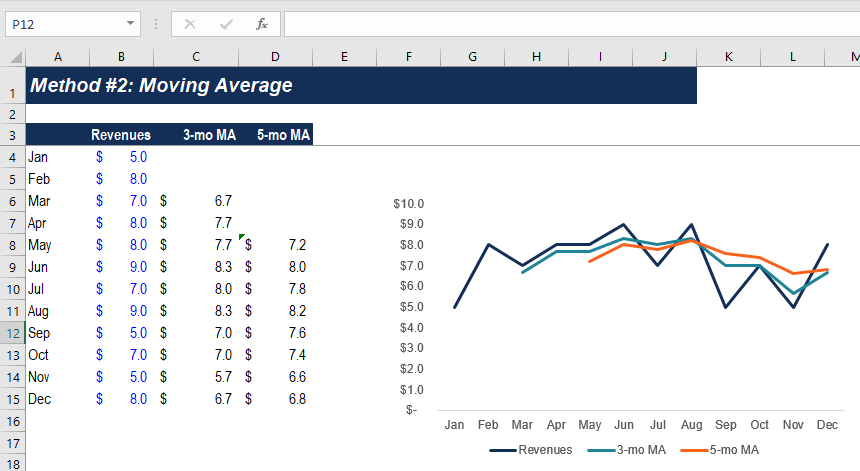
- Moving Averages: Calculates the average of a fixed number of past data points.
- Exponential Smoothing: Gives more weight to recent data points.
- Trend Analysis: Identifies long-term trends in data, often using regression.
- Seasonal Analysis: Identifies and accounts for predictable seasonal variations.
- Regression Analysis: Examines the relationship between a dependent variable (e.g., revenue) and one or more independent variables (e.g., marketing spend, economic indicators). It helps in understanding how changes in one variable might affect another.
- Econometric Models: Advanced statistical models that integrate economic theories and statistical methods to forecast economic variables and their impact on a business.
The Financial Forecasting Process: A Step-by-Step Guide
Developing robust financial forecasts involves a systematic approach, moving from data collection to continuous refinement.
Step 1: Define Objectives and Scope
Before starting, clearly articulate what the forecast aims to achieve (e.g., project sales for next quarter, assess cash flow for a new project, evaluate profitability for the next three years). Define the time horizon (short-term, medium-term, long-term) and the specific financial statements or metrics to be forecasted (e.g., income statement, balance sheet, cash flow statement).
Step 2: Gather Relevant Data
This involves collecting both internal and external data.
* Internal Data: Historical financial statements (revenue, costs, assets, liabilities), operational data (sales volumes, customer acquisition costs, production capacity), and budgeting information.
* External Data: Industry trends, economic indicators (GDP growth, inflation, interest rates), competitor analysis, market size, and regulatory changes.
Step 3: Select Appropriate Forecasting Methods
Based on the objectives, data availability, and the nature of the business, choose the most suitable qualitative and/or quantitative methods. Often, a combination of methods yields the most accurate results. For instance, time series analysis for stable revenue streams combined with executive opinion for new product launches.
Step 4: Develop Assumptions
Assumptions are critical to any forecast. They represent the educated guesses about future conditions that will influence your financial outcomes. These include assumptions about sales growth rates, pricing strategies, cost of goods sold, operating expenses, interest rates, tax rates, and capital expenditures. Document all assumptions clearly, as they form the basis of your projections.
Step 5: Construct the Forecasts
Using the chosen methods and defined assumptions, build your financial models. This typically involves projecting the income statement, balance sheet, and cash flow statement. Start with revenue projections, then estimate variable and fixed costs, leading to projected net income. Finally, integrate balance sheet and cash flow projections to provide a complete financial picture. Spreadsheet software (like Excel) is commonly used for this step.
Step 6: Analyze and Validate Forecasts
Once the initial forecasts are complete, critically review them for reasonableness and consistency.
* Sensitivity Analysis: Test how changes in key assumptions (e.g., a 10% drop in sales, a 5% increase in material costs) impact the financial outcomes. This helps identify the most sensitive variables and potential risks.
* Scenario Planning: Develop multiple scenarios (e.g., best-case, worst-case, most-likely) to understand the range of possible outcomes.
* Historical Comparison: Compare forecast trends with historical performance to identify any significant deviations that require further investigation.
Step 7: Monitor and Revise
Financial forecasting is an iterative process. Markets and business conditions constantly change. Regularly compare actual results against your forecasts and identify the reasons for any variances. Use this feedback loop to refine your assumptions and models, making subsequent forecasts more accurate. This continuous monitoring and revision are key to maintaining the relevance and accuracy of your financial forecasting efforts.
Challenges and Best Practices in Financial Forecasting
While indispensable, financial forecasting comes with its share of challenges. Overcoming them requires discipline, flexibility, and a commitment to continuous improvement.
Common Challenges
- Data Quality and Availability: Inaccurate, incomplete, or inconsistent historical data can lead to flawed forecasts.
- Unforeseen Events: Economic downturns, technological disruptions, natural disasters, or pandemics can significantly derail even the most carefully constructed forecasts.
- Assumption Sensitivity: Forecasts are highly dependent on underlying assumptions. If these assumptions prove incorrect, the entire forecast can be rendered inaccurate.
- Human Bias: Optimism or pessimism from forecasters can inadvertently influence projections.
- Complexity: As businesses grow, the number of variables increases, making forecasting more complex.
Best Practices for Effective Financial Forecasting
- Integrate Multiple Perspectives: Combine quantitative data with qualitative insights from sales, operations, marketing, and executive teams for a more holistic view.
- Use Rolling Forecasts: Instead of static annual forecasts, adopt rolling forecasts that are updated regularly (e.g., quarterly for the next 12-18 months). This allows for greater adaptability to changing conditions.
- Focus on Key Drivers: Identify the most significant variables that impact your financial performance and focus your forecasting efforts on accurately predicting these.
- Document Assumptions Clearly: Transparency in assumptions is crucial for validation and for understanding why actual results might deviate.
- Regularly Review and Update: Financial forecasts are living documents. Consistently compare actual performance against forecasts and adjust models and assumptions accordingly.
- Embrace Technology: Utilize specialized forecasting software or advanced spreadsheet techniques to automate processes, reduce errors, and conduct sophisticated analyses like sensitivity and scenario planning.
- Promote Collaboration: Foster cross-departmental collaboration to ensure forecasts are built on comprehensive internal knowledge and are aligned with operational realities.
- Keep it Simple (Where Possible): Avoid over-complicating models. A simpler, understandable model with clear assumptions is often more reliable than an overly complex one.
Integrating Financial Forecasting with Strategic Planning
Financial forecasting is not a standalone exercise; its true power lies in its integration with a company's broader strategic planning process. It serves as the quantitative foundation upon which strategic decisions are built and evaluated.
When strategic goals are formulated, financial forecasts provide the means to assess their feasibility and financial impact. For example, if a strategic objective is to increase market share by 20%, financial forecasts can model the associated revenue growth, marketing expenditure, operational costs, and capital investment required to achieve this goal. This integration ensures that strategies are not just ambitious but also financially viable and sustainable.
Conversely, the outputs of financial forecasting can inform and refine strategic plans. If a forecast reveals potential cash flow issues under certain growth scenarios, it might prompt a re-evaluation of the growth strategy or a search for alternative funding sources. It helps identify financial risks embedded in strategic choices and allows for proactive mitigation. This dynamic interplay creates a robust feedback loop, where financial realities shape strategic aspirations, and strategic ambitions drive the need for accurate financial projections.
Tools and Technologies for Enhanced Financial Forecasting
The evolution of technology has significantly transformed the landscape of financial forecasting, making it more efficient, accurate, and accessible.
Spreadsheet Software
Microsoft Excel and Google Sheets remain fundamental tools for many businesses, especially smaller ones. Their flexibility allows for custom model creation, scenario analysis, and basic data visualization. However, they can become cumbersome for very large datasets or complex, integrated forecasts.
Enterprise Resource Planning (ERP) Systems
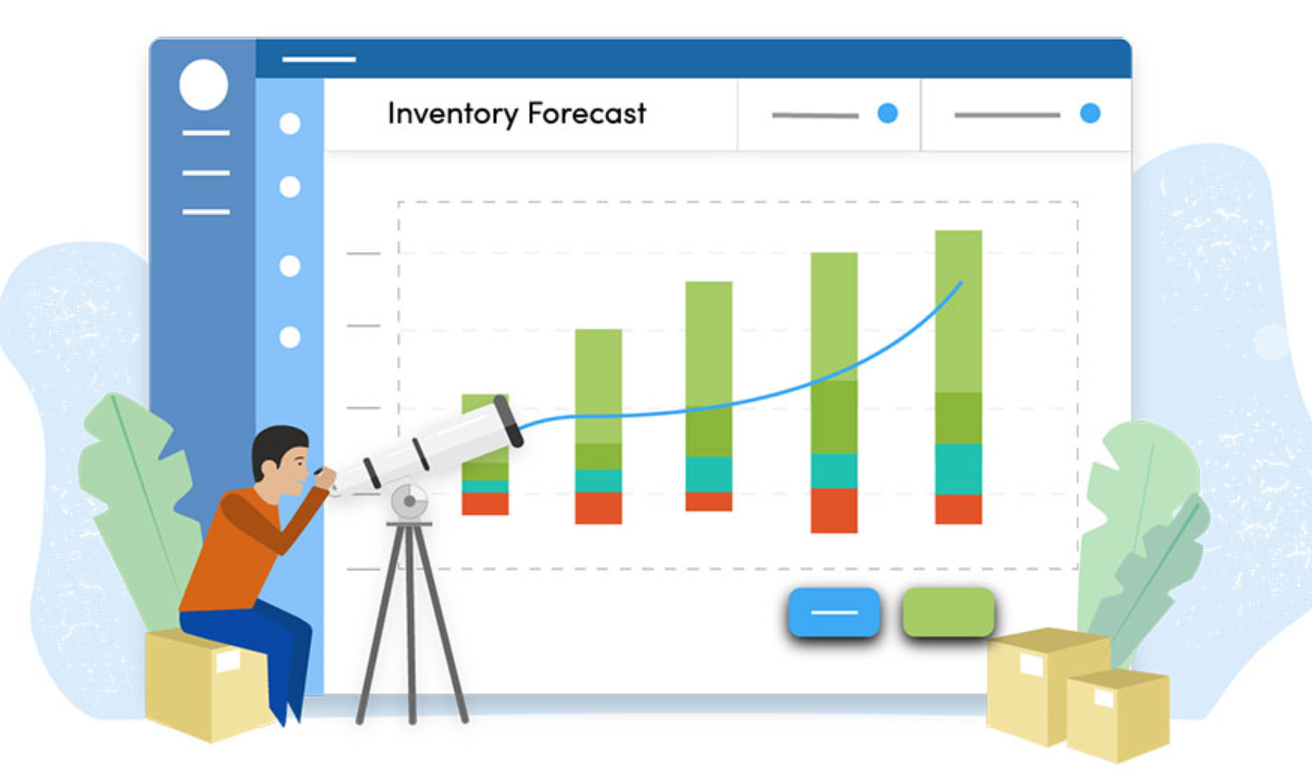
ERP systems like SAP, Oracle, and Microsoft Dynamics often include forecasting modules that integrate financial data with operational data (sales, inventory, production). This integration allows for a more holistic view and automated data flow, reducing manual errors.
Dedicated Financial Planning & Analysis (FP&A) Software
Specialized FP&A software solutions (e.g., Anaplan, Adaptive Planning, Vena Solutions, Cube) are designed specifically for budgeting, planning, and forecasting. These tools offer advanced features like:
* Driver-based modeling: Link forecasts to key business drivers.
* Scenario and sensitivity analysis: Easily run multiple "what-if" scenarios.
* Collaboration features: Enable multiple users to contribute and review forecasts.
* Data integration: Connect to various data sources for seamless data flow.
* Reporting and dashboards: Create compelling visual reports for stakeholders.
Business Intelligence (BI) and Data Visualization Tools
Tools like Tableau, Power BI, and Qlik Sense can be used in conjunction with forecasting models to visualize trends, identify patterns, and present forecast results in an intuitive manner. While not forecasting tools themselves, they enhance the understanding and communication of forecasts.
Machine Learning and AI
Emerging technologies like machine learning (ML) and artificial intelligence (AI) are beginning to play a role in advanced financial forecasting. ML algorithms can analyze vast amounts of historical data to identify complex patterns and make highly accurate predictions, especially in time series forecasting. They can adapt to changing conditions and learn from past errors, potentially leading to more dynamic and precise forecasts in the future.
Conclusion
Mastering financial forecasting is an indispensable pursuit for any organization committed to sustainable growth and resilience. It transcends mere number crunching, evolving into a strategic imperative that illuminates the path forward, mitigates risks, and unlocks opportunities. From defining clear objectives and meticulously gathering data to embracing sophisticated analytical methods and leveraging modern technological tools, each step in the forecasting process contributes to a more informed and agile business.
By integrating robust financial forecasting with strategic planning, businesses can ensure their ambitions are grounded in financial reality, allowing for proactive adjustments rather than reactive responses to market shifts. The continuous cycle of monitoring, analysis, and revision ensures that forecasts remain relevant and accurate, serving as a dynamic compass in an ever-changing economic landscape. Ultimately, the commitment to diligent and intelligent financial forecasting empowers businesses not just to survive, but to truly thrive, making well-calculated moves that lead to lasting success and growth.