Boost Profits with Financial Forecasting

In the dynamic world of business, the ability to anticipate future financial performance is not just an advantage; it's a necessity for survival and growth. This is precisely where financial forecasting comes into play. It involves using historical data, current market trends, and various analytical techniques to project a company's future financial state, including revenues, expenses, and profits. By painting a clear picture of potential financial scenarios, businesses can make informed decisions, mitigate risks, and seize opportunities.

Accurate financial forecasts serve as a compass for strategic planning, guiding management in resource allocation, budget setting, and operational adjustments. They empower decision-makers to look beyond immediate challenges and proactively shape the company's trajectory, rather than merely reacting to market shifts. Without a robust forecasting process, businesses often operate in the dark, leading to inefficient spending, missed growth potential, and increased vulnerability to economic downturns.
The direct link between sound financial forecasting and increased profitability is undeniable. When a business can foresee potential cash flow shortages, it can arrange financing proactively, avoiding costly last-minute solutions. Similarly, identifying periods of expected revenue growth allows for strategic investment in marketing, production capacity, or human resources to capitalize fully on the opportunity. It transforms uncertainty into manageable probabilities, enabling smarter financial stewardship.
Ultimately, mastering financial forecasting is about more than just predicting numbers; it's about building resilience, fostering innovation, and driving sustainable success. It provides the foresight needed to optimize operations, enhance competitive advantage, and ultimately, significantly boost a company’s bottom line.

Why Financial Forecasting is Crucial for Business Success
Financial forecasting is not a theoretical exercise but a practical tool that underpins virtually every strategic decision within an organization. Its importance spans several critical areas, from strategic planning to investor relations, making it an indispensable element of modern business management.
Firstly, it facilitates strategic planning. By projecting revenues and costs, companies can set realistic goals, allocate capital effectively, and develop actionable plans to achieve their long-term objectives. Whether it's expanding into new markets, launching a new product line, or investing in research and development, these decisions are better informed when underpinned by solid financial projections.
Secondly, forecasting is vital for budgeting and resource allocation. A well-developed financial forecast provides the foundation for creating annual budgets. It helps managers understand how much capital will be available, how it should be distributed across departments, and where potential bottlenecks or surpluses might occur. This allows for optimal use of financial and human resources, preventing overspending in some areas and under-resourcing in others.

Thirdly, it plays a key role in risk management. By anticipating potential financial challenges, such as cash flow shortages or declining sales, businesses can develop contingency plans. This proactive approach helps mitigate negative impacts, protecting the company's financial health and stability. For example, a forecast might highlight an upcoming dip in sales, prompting management to consider promotional campaigns or cost-cutting measures in advance.

Finally, strong financial forecasts are essential for attracting investors and securing financing. Lenders and investors scrutinize a company's ability to project its financial future. Credible forecasts demonstrate strong management, a clear understanding of the market, and a viable business model, significantly increasing the likelihood of securing necessary funding for growth and operations.
Types of Financial Forecasting Methods
Understanding the various methods of financial forecasting is essential for choosing the most appropriate approach for different business needs and market conditions. These methods broadly fall into two categories: qualitative and quantitative.
Qualitative Forecasting Methods
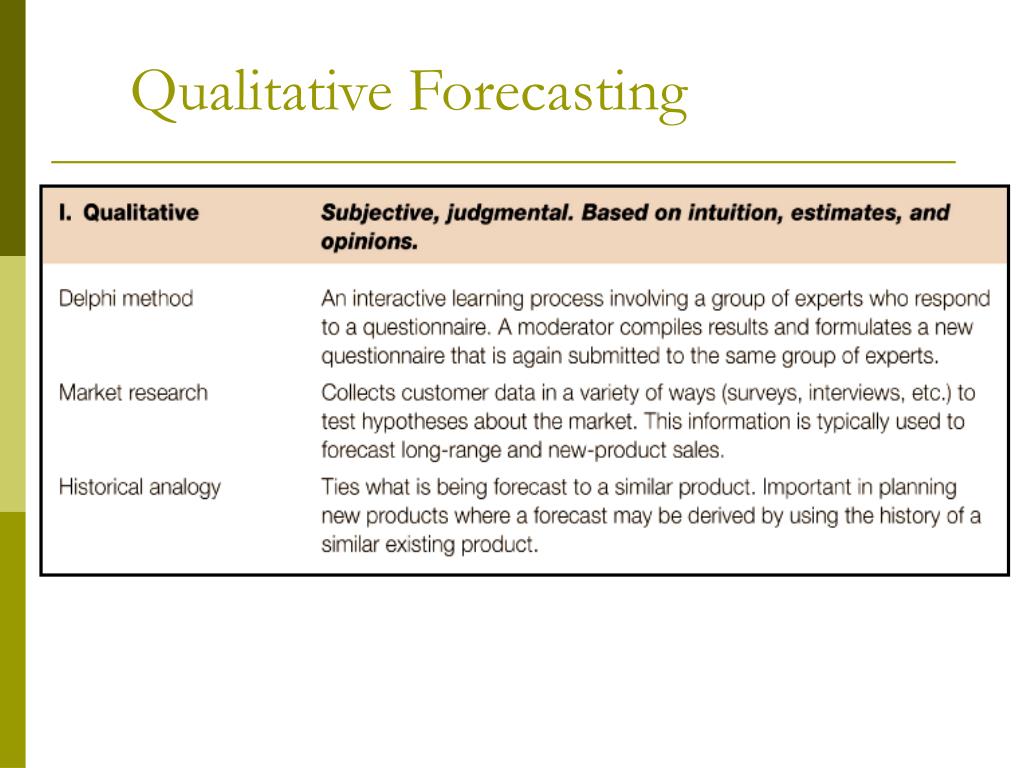
Qualitative methods are subjective and rely on expert judgment and opinions, often used when historical data is scarce or irrelevant, such as for new product launches or during periods of significant market disruption.
- Expert Opinion: This involves consulting individuals with deep industry knowledge or specific expertise. It can be through one-on-one interviews or group discussions.
- Delphi Method: A more structured approach where a panel of experts provides anonymous forecasts, which are then aggregated and fed back to the experts for reconsideration. This iterative process aims to achieve a consensus without direct confrontation, reducing bias.
- Market Research: Surveys, interviews, and focus groups can gauge consumer preferences, buying intentions, and market trends, providing insights that inform forecasts, especially for new products or services.
Quantitative Forecasting Methods
Quantitative methods are objective and rely on historical data and mathematical models to predict future outcomes. They are most effective when sufficient reliable past data is available and market conditions are relatively stable.
- Time Series Analysis: This method analyzes historical data points collected over time to identify patterns and trends.
- Moving Averages: Calculates the average of a specific number of past periods to smooth out short-term fluctuations and identify trends. Simple Moving Average (SMA) and Weighted Moving Average (WMA) are common variations.
- Exponential Smoothing: Similar to moving averages but assigns exponentially decreasing weights to older observations, giving more weight to recent data.
- Trend Analysis: Identifies the long-term upward or downward movement in data, often using linear regression to project future values.
- Seasonal Analysis: Identifies predictable patterns that recur over a specific period (e.g., daily, weekly, monthly, quarterly, yearly), such as increased sales during holiday seasons.
- Causal Methods (Regression Analysis): These methods establish a cause-and-effect relationship between the variable being forecasted (dependent variable) and one or more independent variables.
- Simple Linear Regression: Predicts the dependent variable based on one independent variable (e.g., sales based on advertising spend).
- Multiple Regression: Predicts the dependent variable based on two or more independent variables (e.g., sales based on advertising spend, competitor pricing, and economic growth).
The choice of method often depends on the availability of data, the stability of the environment, and the required level of accuracy. Many businesses use a hybrid approach, combining qualitative insights with quantitative analysis to develop more robust and reliable forecasts.
Key Components of Effective Financial Forecasting
A comprehensive financial forecast isn't just a single number; it's a detailed projection encompassing several interconnected financial statements. Each component provides unique insights into a company's future financial health.
Revenue Forecasts
This is often the starting point, predicting future sales and income. It's built upon assumptions about sales volume, pricing strategies, market demand, economic conditions, and competitive landscape. An accurate revenue forecast is critical because it drives many other components of the financial plan.
Expense Forecasts
Predicting future operational costs is equally important. This includes both fixed costs (rent, salaries, depreciation) and variable costs (cost of goods sold, commissions, raw materials) that fluctuate with sales volume. Accurate expense forecasting helps in managing budgets, identifying areas for cost reduction, and optimizing operational efficiency.
Cash Flow Forecasts
Perhaps the most vital component for short-term liquidity, a cash flow forecast projects the inflows and outflows of cash over a specific period. It helps businesses understand if they will have enough cash to meet their obligations, pay employees, and invest in growth. It distinguishes between actual cash movements and non-cash accounting entries, making it indispensable for managing working capital.
Profit and Loss (P&L) Forecasts
Also known as the Income Statement forecast, this projects a company's expected revenues, costs, and ultimately, its net profit or loss over a future period. It integrates revenue and expense forecasts to show the anticipated profitability of operations. The P&L forecast is crucial for assessing business viability and performance.
Balance Sheet Forecasts
This component projects the future state of a company's assets, liabilities, and equity at a specific point in time. It's often derived from the P&L and cash flow forecasts, as changes in revenue, expenses, and cash impact balance sheet items like accounts receivable, inventory, and long-term debt. A balanced balance sheet forecast ensures consistency across all financial projections.
Each of these components is interconnected. Changes in one area will inevitably impact others. Therefore, effective financial forecasting requires a holistic approach, ensuring that all projections are consistent and logically aligned to provide a comprehensive view of the company's financial future.
The Process of Implementing Financial Forecasting
Implementing a robust financial forecasting process involves several structured steps, from defining objectives to continuous monitoring and adjustment. This systematic approach ensures accuracy, relevance, and utility of the forecasts.
1. Define Objectives and Scope
Before any numbers are crunched, it's crucial to clarify what the forecast aims to achieve. Is it for budgeting, strategic planning, securing funding, or assessing a new project? Defining the time horizon (short-term, medium-term, long-term) and the level of detail required will shape the entire process.
2. Gather Relevant Data
Accurate forecasting hinges on reliable data. This includes historical financial statements (income statements, balance sheets, cash flow statements), sales data, operational metrics, market research, economic indicators, and competitor data. The more comprehensive and clean the data, the more reliable the forecast.
3. Choose Appropriate Forecasting Methods
Based on the objectives, available data, and the volatility of the market, select the most suitable qualitative and/or quantitative forecasting methods. A combination of methods often yields the most balanced results. Consider the trade-off between simplicity and accuracy.
4. Develop the Forecast
This is where the chosen methods are applied to the data. Financial models (often in spreadsheets or specialized software) are built to project the various components: revenue, expenses, cash flow, P&L, and balance sheet. Sensitivity analysis should be performed to understand how changes in key assumptions impact the outcomes. This involves creating "what-if" scenarios (optimistic, pessimistic, most likely).
5. Review and Validate
Once the initial forecast is developed, it must be thoroughly reviewed. This involves checking for internal consistency, logical errors, and comparing projections against historical performance and external benchmarks. Senior management and key stakeholders should review the assumptions and results to ensure they align with business strategy and market realities.
6. Monitor and Adjust
Financial forecasting is not a one-time event; it's an ongoing process. Once the forecast is in use, actual performance should be continually monitored against the projections. Significant deviations warrant investigation. Forecasts should be updated regularly (e.g., quarterly, monthly) to incorporate new information, reflect changes in market conditions, and adjust for past variances. This iterative process, often called rolling forecasts, ensures the forecast remains relevant and accurate.
7. Communicate Insights
The final step is to effectively communicate the forecast and its implications to relevant stakeholders. This includes highlighting key assumptions, potential risks, and strategic recommendations derived from the analysis. Clear communication ensures that the insights from the forecast are understood and used to inform decision-making across the organization.
Overcoming Challenges in Financial Forecasting
Despite its undeniable benefits, financial forecasting is fraught with challenges that can undermine its accuracy and utility. Recognizing and addressing these hurdles is crucial for developing reliable projections.
One of the primary challenges is data quality and availability. Forecasts are only as good as the data they are built upon. Inaccurate, incomplete, or inconsistent historical data can lead to skewed projections. Businesses must invest in robust data collection systems and ensure data integrity to mitigate this.
Market volatility and external factors pose another significant hurdle. Economic downturns, geopolitical events, sudden technological shifts, or changes in consumer behavior can rapidly render even the most carefully constructed forecasts obsolete. While some external factors can be anticipated, many are unpredictable. Scenario planning and sensitivity analysis become invaluable tools here, allowing businesses to prepare for multiple potential futures.
Human bias can also creep into the forecasting process. Optimism or pessimism from managers, a tendency to "sandbag" numbers, or confirmation bias (seeking out information that supports pre-existing beliefs) can distort projections. Implementing structured forecasting processes, using multiple independent data sources, and promoting a culture of objective analysis can help minimize this.
Furthermore, selecting the right forecasting method for specific circumstances can be complex. An inappropriate method might fail to capture nuances in the data or be overly sensitive to noise. A good understanding of various qualitative and quantitative techniques, coupled with experience, helps in choosing the best fit.
Finally, resource constraints can limit the depth and sophistication of forecasting efforts. Small businesses, in particular, may lack the dedicated personnel, time, or advanced software necessary for detailed financial modeling. In such cases, focusing on core components and leveraging simpler, yet effective, methods becomes essential. Embracing technology and fostering a data-driven culture can significantly help in overcoming these challenges and elevating the quality of financial forecasts.
How Financial Forecasting Directly Impacts Profitability
The direct link between robust financial forecasting and enhanced profitability is a cornerstone of successful business management. By providing a clearer view of the future, forecasting empowers companies to make decisions that positively impact their financial health.
One key way is through optimized resource allocation. Accurate expense forecasts allow businesses to identify areas of potential overspending and allocate capital more efficiently. For instance, anticipating a decline in demand for a specific product might lead to reduced inventory purchases, preventing dead stock and freeing up cash. Conversely, forecasting high demand for another product enables proactive investment in production capacity, ensuring sales opportunities aren't missed due to shortages. This optimization directly reduces costs and maximizes revenue potential.
Secondly, forecasting aids in identifying growth opportunities and strategic investments. By projecting market trends and consumer behavior, businesses can pinpoint emerging markets, assess the viability of new product lines, or evaluate expansion strategies. A forecast might reveal that investing in a particular technology or marketing campaign could yield significant returns, leading to increased revenue and market share, thus boosting overall profitability.
Thirdly, it enables improved decision-making for pricing and sales strategies. Understanding projected costs and market demand allows for more accurate pricing, ensuring products or services are priced competitively while maintaining healthy profit margins. Forecasts can also inform sales targets and incentivize sales teams to focus on the most profitable segments.
Moreover, effective forecasting leads to better cash flow management and reduced financing costs. By anticipating periods of cash surplus or deficit, companies can make timely decisions regarding short-term investments or borrowing. Avoiding last-minute, high-interest loans for unexpected cash shortfalls, or wisely investing excess cash, directly contributes to profit by minimizing financing expenses and maximizing returns on available funds.
Finally, risk mitigation through forecasting directly protects profitability. Identifying potential financial risks, such as declining sales, rising costs, or liquidity issues, allows management to develop contingency plans. This proactive approach prevents or minimizes the impact of adverse events, safeguarding the company's assets and ensuring continuity of operations, which in turn protects the bottom line from unforeseen losses.
Conclusion
Financial forecasting is far more than a mere projection of numbers; it is a critical strategic imperative that provides the clarity and foresight essential for navigating the complexities of the business world. From informing crucial strategic decisions and optimizing resource allocation to mitigating risks and identifying lucrative growth opportunities, its impact on a company's financial health and profitability is profound and undeniable.
By meticulously analyzing historical data, understanding current market dynamics, and thoughtfully applying various analytical methods, businesses can transform uncertainty into actionable insights. The process of developing, implementing, and continuously refining financial forecasts empowers organizations to operate proactively, allowing them to anticipate challenges, capitalize on opportunities, and maintain a competitive edge. Ultimately, mastering the art and science of financial forecasting is not just about predicting the future; it's about actively shaping a more prosperous and sustainable one, directly contributing to a healthier bottom line and long-term success.